How Does Drone Delivery Work? Tech and Logistics Explained
Commercial UAV Pilot & Aerial Cinematography Specialist at Drone Nestle · FAA Part 107 Remote Pilot Certification, Commercial UAS Operations · 10+ Years in Commercial UAV Operations, Flight Hardware Benchmarking & 4K Aerial Cinematography
Autonomous drone delivery utilizes a sophisticated blend of GPS navigation, AI-driven obstacle avoidance, and decentralized logistics hubs. These systems allow aircraft to transport packages independently, using advanced sensors to navigate urban environments and deliver parcels via precision winches or landing pads.
🎯 Key Takeaways
- Drones use LiDAR and AI to navigate complex urban environments autonomously.
- Hub-and-spoke logistics models allow drones to recharge and reload efficiently.
- Winch systems and tethers provide a safer alternative to landing in yards.
- FAA Part 135 certification is required for commercial beyond-visual-line-of-sight flight.
- Encrypted data links ensure secure communication between the drone and the ground station.
Drone delivery works through a synchronized loop of autonomous flight software, real-time telemetry, and precise payload management. When you place an order, the process moves from a warehouse “nest” to your doorstep via a pre-programmed mission profile. These drones are not manually piloted; instead, they are managed by a centralized Unmanned Aircraft System Traffic Management (UTM) platform that coordinates flight paths around buildings, power lines, and other aircraft using 4G or 5G cellular networks for constant data relay.

Understanding this tech is vital because it represents the shift from manual “remote control” to true logistical automation. For you, this means a package arrives in under 30 minutes because the drone bypasses ground traffic entirely. The system relies on a “sense-and-avoid” architecture that allows the aircraft to make split-second decisions without human intervention, ensuring the package arrives safely and precisely where it is supposed to be.


Core Technologies Powering Autonomous Flight Systems
The “brain” of a delivery drone is the flight controller, which integrates data from multiple onboard sensors to maintain stability. Unlike recreational drones, delivery units use triple-redundant IMUs (Inertial Measurement Units) and dual-frequency GPS to ensure the aircraft knows its position within a few centimeters. This level of precision is necessary to navigate the complex “last-mile” environment of suburban neighborhoods.
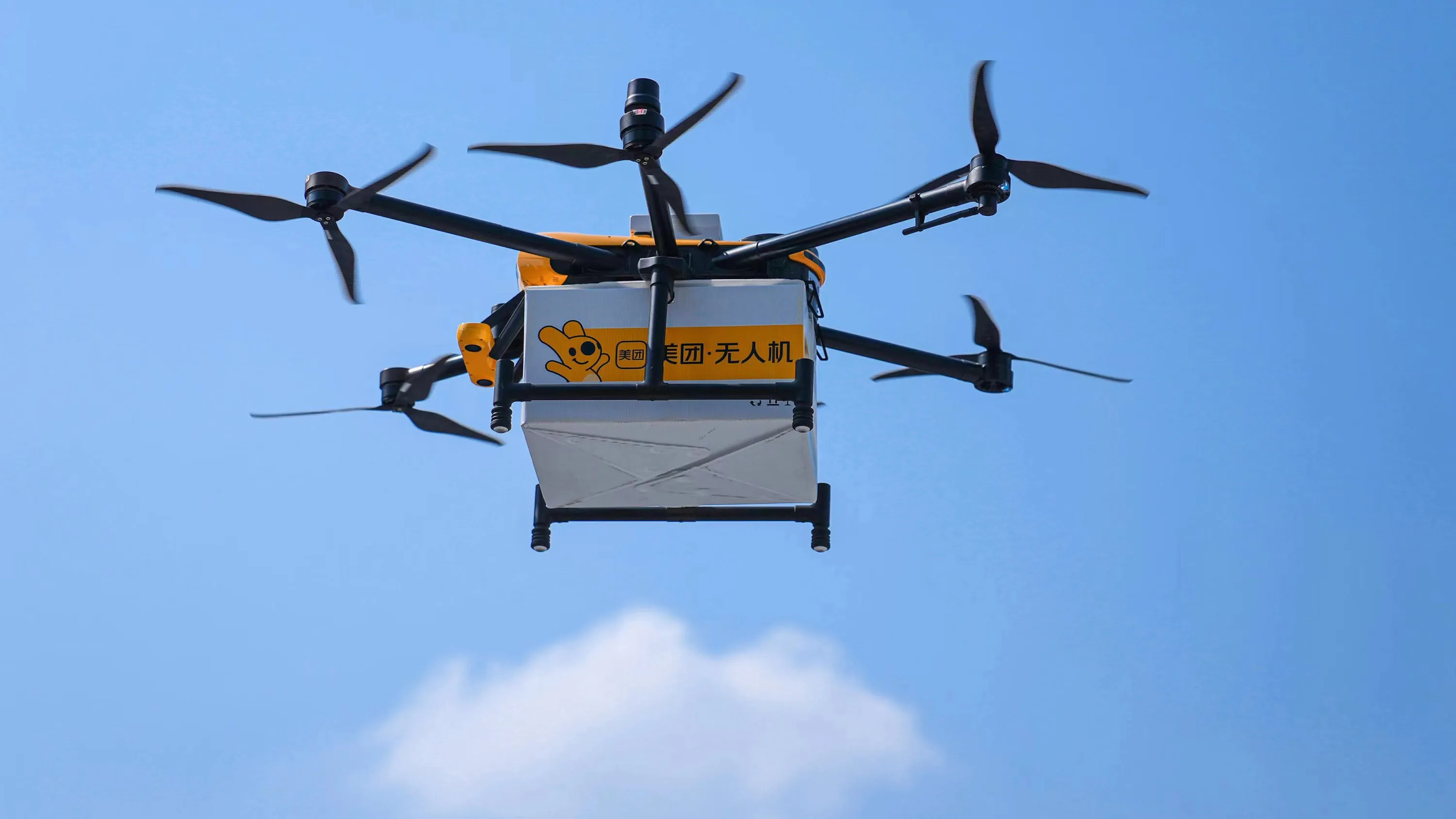
Computer Vision and Obstacle Avoidance
To navigate safely, delivery drones utilize Computer Vision (CV). This involves onboard processors analyzing live video feeds to identify objects in real-time. This tech allows the drone to distinguish between a static chimney and a moving bird or a backyard power line. Key sensors involved include:


- LiDAR (Light Detection and Ranging): Uses laser pulses to create a 3D map of the surroundings, allowing for millisecond reaction times to new obstacles.
- Ultrasonic Sensors: Primarily used during the final descent to measure the exact distance to the ground or a landing pad.
- Optical Flow Sensors: These track patterns on the ground to maintain a steady hover, even if the GPS signal is momentarily lost or “spoofed.”
Geofencing and Real-Time Routing
Before the motors even spin up, the drone is assigned a virtual corridor. This is managed through geofencing technology, which creates digital “fences” the drone cannot cross. If an emergency aircraft (like a medivac helicopter) enters the airspace, the UTM system pushes an instant route update to the drone. Your package is rerouted or the drone is instructed to loiter in a safe zone until the path is clear, all handled autonomously via the drone’s encrypted C2 (Command and Control) link.
Everything You Need to Know About Drone Delivery
Drone delivery represents the pinnacle of modern logistics, combining autonomous flight technology, complex software integration, and precision engineering to move goods through the air. This guide breaks down the sophisticated lifecycle of a drone delivery mission, from the moment a user taps a screen to the final drop-off at a doorstep. Understanding these steps is essential for logistics professionals, tech enthusiasts, and consumers curious about how the future of “last-mile” delivery functions in real-world environments. By following this comprehensive walkthrough, you will learn the intricate requirements and operational phases that make aerial delivery possible.
Step 1: Order Placement and Digital Geofencing
What you need: A delivery-ready mobile application, a GPS-enabled smartphone, and a product weight profile (typically under 5 pounds or 2.3 kilograms).


Instructions: The process begins when a customer selects an item through a specialized delivery portal. The software immediately performs a “geofencing” check to ensure the delivery address falls within a 5-to-10-mile radius of the fulfillment center. Behind the scenes, the system calculates the “all-up weight” (AUW) of the order. Most commercial delivery drones are optimized for light payloads to preserve battery life and adhere to FAA Part 107 regulations. The system also verifies weather conditions in real-time, checking for wind speeds exceeding 20 mph or heavy precipitation that could ground the fleet. Once the order is validated against both weight and atmospheric constraints, a digital flight token is generated for the specific mission.
Pro Tip: Always ensure your delivery “drop zone” is clear of overhead obstructions like power lines or overhanging branches before ordering, as the software may use historical satellite imagery to flag unsafe landing zones before you even checkout.
Step 2: Precision Fulfillment and Payload Balancing
What you need: Specialized aerodynamic packaging, a calibrated digital scale, and a vibration-resistant securing mechanism.
Instructions: In the warehouse, the item is placed into a purpose-built delivery container. Unlike standard cardboard boxes, these containers are often shaped like a teardrop or a wedge to minimize drag during high-speed transit. The packaging must be weighted so that the center of gravity (CoG) remains perfectly centered beneath the drone’s chassis. An imbalanced load can cause the flight controllers to overwork specific motors, leading to premature battery drainage or mid-air instability. The package is then attached to the drone’s “cargo bay” or “winch hook” using a magnetic or mechanical locking system that communicates directly with the drone’s onboard computer to confirm a secure connection.
Pro Tip: Use internal padding made of lightweight expanded polypropylene (EPP) rather than heavy bubble wrap to keep the payload weight down while providing maximum shock absorption for the inevitable movement during flight.
Step 3: Pre-Launch Diagnostic and Battery Management
What you need: A fully charged 6S or 12S Lithium-Polymer (LiPo) battery, a telemetry ground station, and a multi-point inspection checklist.
Instructions: Before the rotors spin up, the drone undergoes a rigorous automated “bit” (built-in test). This includes calibrating the Inertial Measurement Unit (IMU), checking the health of the Global Navigation Satellite System (GNSS) receivers, and ensuring the compass is free from local magnetic interference. The battery is the most critical component; the system checks for “cell sag” to ensure it can provide the high current required for takeoff. Technicians or automated arms verify that the propeller blades are free of nicks or cracks. A 30-second “motor spin test” is often performed at low RPM to ensure that the electronic speed controllers (ESCs) are communicating correctly with the flight computer before the drone is cleared for departure.
Pro Tip: Never launch a delivery drone with a battery that is below 95% charge, as the initial climb to cruising altitude (usually 200-400 feet) consumes a disproportionate amount of energy compared to level flight.
Step 4: Autonomous Pathfinding and Airspace Integration
What you need: UTM (Unmanned Traffic Management) software, LIDAR sensors, and a pre-defined 3D flight corridor.
Instructions: Once the drone lifts off, it transitions from manual or supervised hover to fully autonomous cruise mode. It follows a pre-calculated flight path that avoids “no-fly zones” such as airports, hospitals, or government buildings. To navigate safely, the drone uses a combination of GPS for general positioning and LIDAR (Light Detection and Ranging) or computer vision for “Detect and Avoid” (DAA) capabilities. This allows the aircraft to sense unexpected obstacles like cranes, birds, or other low-flying aircraft in real-time. The drone communicates its position constantly to the UTM provider, ensuring it maintains a “separation buffer” from other drones operating in the same airspace. It maintains a cruising speed of roughly 40-60 mph to reach its destination efficiently.
Pro Tip: Program “lost link” procedures into the flight controller so that if the drone loses its primary data connection, it will automatically climb to a safe altitude and return to the base (RTH) rather than hovering in place.
Step 5: Visual Navigation and Drop-Zone Identification
What you need: Downward-facing 4K cameras, Infrared (IR) sensors, and a high-contrast landing mat or QR-coded delivery marker.
Instructions: As the drone arrives at the customer’s coordinates, it begins its descent from cruising altitude to the “delivery height” (usually 20-30 feet). The drone uses its downward-facing cameras to scan for a safe “clear zone.” It looks for specific visual markers provided by the customer or identifies flat, level surfaces away from pedestrians and pets. Modern delivery drones use “semantic segmentation” (a type of AI) to distinguish between a safe lawn and an unsafe swimming pool or moving car. If the drone detects any movement within a 10-foot radius of the target, it will abort the descent and hover until the area is clear. This phase is the most computationally intensive part of the flight as the drone battles local wind gusts while processing visual data.
Pro Tip: For the most reliable delivery, place a high-contrast “X” or a specific drone landing mat in an open area; the computer vision system locks onto these geometric shapes much faster than a standard grass surface.
Step 6: Safe Package Deployment and Winch Control
What you need: An automated winch system with a tension-sensing cable or a precision landing gear release.
Instructions: Depending on the drone’s design, it will either land completely or deploy the package via a tether. For tethered delivery (like the Google Wing model), the drone remains at a safe height (approx. 23 feet) while a winch lowers the package. The system monitors the tension on the line; as soon as the package touches the ground and the tension drops, the hook automatically releases. This prevents the drone from being pulled down if the package gets snagged. If the drone is a “landing” type (like the Amazon Prime Air model), it will touch down on its landing gear, release the cargo hold, and immediately take off again to minimize ground time. After release, the drone’s sensors confirm the package is detached before the winch is retracted.
Pro Tip: If using a winch system, ensure there are no clotheslines or low-hanging wires nearby, as these are difficult for some sensors to detect and can snag the delivery tether.
Step 7: Post-Mission Analysis and Telemetry Review
What you need: A flight log database, black-box data recorder, and diagnostic software.
Instructions: After the drone returns to its base and lands, the mission is not truly over until the data is processed. The “black box” data, including battery voltage logs, vibration levels, and motor temperatures, is uploaded to a central server. This “post-flight” check identifies any mechanical wear that occurred during the mission. For example, if Motor 3 showed a slight increase in heat, it may indicate a bearing is starting to fail. The flight path is also reviewed to ensure the drone didn’t deviate into restricted airspace. Finally, the customer receives a notification that the delivery is complete, along with a timestamped photo or video snippet of the package drop-off for verification purposes.
Pro Tip: Reviewing “vibration logs” weekly can help you identify a slightly bent propeller that isn’t visible to the naked eye but could cause a catastrophic failure in future flights.
✅ Final Checklist
- Verify that the payload weight is within the drone’s Maximum Takeoff Weight (MTOW).
- Confirm the delivery coordinates are clear of overhead obstructions and “No-Fly Zones.”
- Ensure the battery health/voltage is consistent across all cells before launch.
- Check that the autonomous flight path is updated with the latest local NOTAMs (Notices to Air Missions).
- Validate that the package release mechanism (winch or landing gear) is fully functional and responsive.
Important Notes:
- Safety First: Never attempt to catch a delivery drone or approach it while the rotors are spinning; the tips of the blades can travel at over 200 mph and cause severe injury.
- Professional Help: If the drone displays a “Compass Variance” or “IMU Error,” do not attempt to fly. Seek assistance from a certified drone technician to recalibrate the internal sensors.
- Estimated Time and Cost: A standard drone delivery mission typically takes 5 to 15 minutes for a 5-mile trip. Operational costs are currently estimated between $1.00 and $10.00 per delivery, depending on the scale of the fleet and local labor costs.
Comparing Delivery Methods: Winch Systems vs. Precision Landing
The most critical part of the logistics chain is the “drop.” You might imagine a drone landing on your porch, but many companies find that landing is actually the most dangerous part of the flight. As a result, two primary delivery philosophies have emerged: the tethered winch and precision ground landing.

The Tethered Winch Approach
Companies like Wing (Alphabet) and Zipline often use a high-altitude hover and winch system. The drone remains at an altitude of 60 to 80 feet—well above trees and power lines—and lowers the package on a high-strength filament. This method is often preferred for several reasons:
- Safety: By staying high, the drone’s high-speed rotors stay far away from people, pets, and property.
- Acoustic Footprint: Drones are loudest when they are close to the ground; winching keeps the noise at a distance.
- Efficiency: The drone doesn’t waste energy descending and ascending, allowing it to return to the hub faster.
Vertical Takeoff and Precision Ground Landing
The alternative, used by retailers like Amazon Prime Air and Walmart, involves the drone physically landing on a designated target. To do this, the drone uses Vision Positioning Systems (VPS) to “see” a specific landing marker or QR code you place in your yard. The drone’s downward-facing cameras lock onto the geometry of the marker to ensure a centered landing. This method is ideal for heavier payloads that might swing or become unstable on a winch line. It also allows the drone to potentially “swap” a fresh battery at the customer site or pick up a return item, creating a two-way logistics loop.
Example: In current Walmart trials, drones use infrared beacons to identify the safest landing spot in a driveway, avoiding cars or stray bicycles that weren’t there when the flight was initially cleared.
Navigational Safety and Obstacle Avoidance Standards
How do these high-tech machines avoid crashing into a neighbor’s chimney, a stray bird, or a power line? The answer lies in Sense-and-Avoid (SAA) technology. Modern delivery drones are not just remote-controlled toys; they are autonomous robots equipped with an array of sensors that act as their eyes and ears in the sky. These systems allow the drone to make split-second decisions without human intervention.
The “Eyes” of the Drone: LiDAR and Computer Vision
To navigate safely, drones use a combination of advanced hardware and software. LiDAR (Light Detection and Ranging) pulses lasers to create a 3D map of the surroundings, while computer vision uses high-resolution cameras to identify objects in real-time. This tech is crucial for the “last yard” of delivery, ensuring the drone doesn’t lower a package onto a pet or a garden gnome.
- Ultrasonic Sensors: These help the drone detect close-range obstacles, especially useful during takeoff and landing.
- Redundant Systems: Most commercial delivery drones carry backup batteries and dual flight controllers to ensure they can land safely even if one component fails.
- Geofencing: Software-based boundaries prevent drones from entering restricted areas like airports or government buildings.
Regulatory Compliance and Remote ID
Safety isn’t just about avoiding physical objects; it’s also about following the rules of the sky. In the United States, the FAA requires Remote ID, which acts like a digital license plate. This allows authorities to identify the drone and its operator in real-time, ensuring accountability. For those interested in the hobbyist side of things, keeping your firmware updated is the best way to stay compliant with these shifting safety standards.
The Role of Ground Infrastructure and Charging Hubs
A delivery drone is only as good as the network supporting it. While the flight itself gets all the glory, the ground infrastructure—or “nesting” stations—is what makes the logistics cycle possible. These hubs serve as the launchpads, landing zones, and maintenance centers for entire fleets of drones.
Smart Nesting Stations and Charging Pads
Instead of returning to a massive warehouse miles away, many drones utilize localized charging hubs. These stations are often automated, allowing a drone to land on a precision-aligned pad and either recharge wirelessly or swap its battery for a fresh one in minutes. This “hot-swapping” technique keeps the delivery cycle moving without lengthy downtime.
- Automated Launchers: These systems prep the drone for flight, verifying weight and balance before it takes off.
- Weather Stations: Hubs are often equipped with local climate sensors to ground the fleet if wind speeds or rain exceed safety limits.
- Precision Landing Mats: Using infrared beacons, these mats guide the drone to a perfect landing every single time, even in low-visibility conditions.
Urban Micro-Fulfillment Centers
The “last mile” of delivery is the most expensive part of the shipping process. To solve this, companies are turning rooftops and shipping containers into micro-fulfillment centers. These small hubs are stocked with high-demand items, allowing a drone to pick up a package and reach a customer within minutes. This decentralized approach reduces the strain on the drone’s battery and ensures lightning-fast service for the end-user.
Conclusion
Drone delivery is no longer a concept from a sci-fi movie; it is a logistics reality powered by cutting-edge sensors, AI-driven navigation, and a robust network of ground infrastructure. By combining sophisticated Sense-and-Avoid technology with localized charging hubs, the industry is overcoming the hurdles of safety and range. As these systems continue to evolve, the sight of a drone dropping off your morning coffee or an emergency medical supply will become as common as seeing a mail truck on your street.
To stay ahead of the curve, keep an eye on local flight regulations and the latest in drone battery technology. If you are a drone enthusiast, now is the perfect time to explore specialized landing pads and signal boosters to enhance your own flight experience. Ready to dive deeper into the world of unmanned aerial vehicles? Explore our latest guide on essential drone accessories to see how you can upgrade your tech today!
❓ Frequently Asked Questions
How do drones ensure they drop the package in the right spot?
Drones use high-precision RTK GPS combined with visual sensors that can recognize specific markers or QR codes provided by the customer for centimeter-level accuracy.
Are delivery drones safe for people and pets during the drop-off?
Yes, they are equipped with ‘sense and avoid’ technology that uses downward-facing sensors to halt the delivery process if any movement is detected in the landing zone.
How do drones handle bad weather like rain or high wind?
Commercial delivery drones are built with high IP ratings for moisture resistance and use powerful brushless motors to maintain stability in winds up to 25 mph.
What is Beyond Visual Line of Sight (BVLOS)?
BVLOS is a regulatory classification allowing drones to fly distances where the operator cannot see them, requiring advanced safety sensors and FAA approval.
What is the maximum weight a delivery drone can carry?
Currently, most retail delivery drones are optimized for small parcels weighing between 3 and 5 pounds, which covers the majority of local household orders.
How is battery life managed for continuous delivery operations?
Automated ground stations, often called ‘nests,’ allow drones to land and automatically swap batteries or use rapid-charging pads to minimize downtime between missions.

Similar Posts