How Long Do Drone Batteries Last? Flight Time & Lifespan Guide
Commercial UAV Pilot & Aerial Cinematography Specialist at Drone Nestle · FAA Part 107 Remote Pilot Certification, Commercial UAS Operations · 10+ Years in Commercial UAV Operations, Flight Hardware Benchmarking & 4K Aerial Cinematography
Most consumer drones offer 20 to 30 minutes of flight time per charge, while the total lifespan of a LiPo battery is typically 200 to 500 charge cycles. Understanding the difference between per-session endurance and long-term battery health is essential for maximizing your equipment’s value.
🎯 Key Takeaways
- Consumer drones typically fly for 20-30 minutes; professional models can reach 40+ minutes.
- Expect a total lifespan of 300-500 charge cycles before significant capacity loss occurs.
- Cold weather and high winds can reduce flight time by up to 50%.
- Store batteries at 40-60% charge to prevent permanent cell damage during long-term storage.
- Replace batteries if you notice swelling, physical damage, or erratic voltage drops.
Most modern consumer drones offer between 25 and 45 minutes of flight time on a single charge. While manufacturers often boast about “maximum flight times” in perfect conditions, your real-world experience will typically be 15% to 20% lower than the number on the box. In terms of total longevity, a standard lithium-polymer (LiPo) or Intelligent Flight Battery usually lasts for 200 to 500 charge cycles before you notice a significant drop in performance.


Understanding these limits is critical for your safety and your wallet. Knowing exactly how long you can stay airborne prevents mid-air emergencies and “return-to-home” panics. Managing your battery’s long-term health ensures you do not have to spend hundreds of dollars on replacements every few months. Whether you are a hobbyist or a professional, mastering power management is the most important part of your pre-flight checklist.
Average Flight Times by Drone Category and Popular Models
Flight time varies significantly depending on the weight of the drone and the capacity of the battery. Generally, lighter drones can hover longer relative to their size. However, larger professional drones carry much bigger batteries to compensate for their heavier cameras and motors. Weather also plays a massive role; fighting a 15mph wind can cut your flight time by a third.


Real-World Stats for Top Models
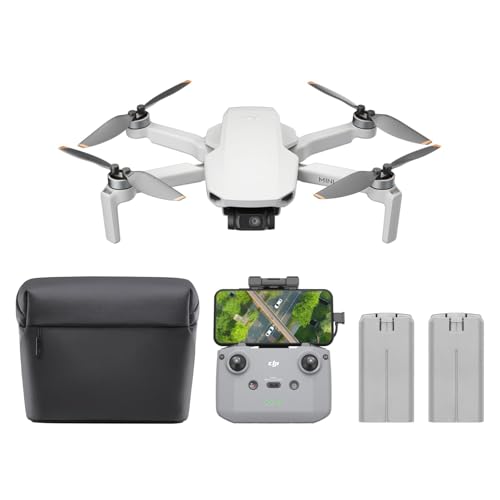
- Mini Drones (Sub-250g): The DJI Mini 4 Pro is rated for 34 minutes with the standard battery and up to 45 minutes with the “Plus” battery. In active flight with recording, expect about 30 and 40 minutes, respectively.
- Prosumer Drones: The DJI Air 3 leads this category with a 46-minute advertised time. You can safely rely on about 38 to 40 minutes of actual shooting time before the low-battery RTH (Return to Home) triggers.
- Flagship Consumer Drones: The Mavic 3 Pro offers around 43 minutes of flight time. However, using the triple-camera system and Sport mode frequently drops this closer to 35 minutes.
- FPV (First Person View) Drones: These are built for speed. The DJI Avata 2 lasts about 18 to 23 minutes. Traditional custom FPV quads often only last 3 to 7 minutes because they prioritize high-speed maneuvers over efficiency.
- Budget/Entry-Level Drones: Brands like Potensic or Holy Stone typically offer 15 to 25 minutes. These batteries often lack the advanced power management found in higher-end models.
Keep in mind that “useful” flight time is always shorter than the total capacity. Most pilots land when they hit 15% to 20% battery to provide a safety buffer. This means if your drone is rated for 30 minutes, you really only have about 24 minutes of productive filming time.
Understanding Battery Lifespan: Cycle Counts and Longevity
The “lifespan” of a battery refers to how many times you can charge and discharge it before the cells degrade. Most drone batteries are Lithium-Polymer (LiPo) or Lithium-Ion. These are powerful but have a finite chemical life. Once a battery reaches the end of its lifespan, it will no longer hold a full charge or provide the necessary voltage for high-speed flight.
What is a Charge Cycle?
A cycle is one full discharge and recharge. If you fly your drone to 50%, charge it, and do the same the next day, that counts as one full cycle. Most Intelligent Flight Batteries are designed to maintain 80% of their original capacity for at least 200 charge cycles. If you take exceptional care of your gear by avoiding extreme temperatures and deep discharges, you can often push this to 400 or 500 cycles before the battery becomes unreliable.


Factors That Shorten Battery Lifespan
- Extreme Temperatures: Flying in temperatures below 32°F (0°C) or above 104°F (40°C) causes rapid chemical degradation. Cold weather causes voltage to drop suddenly, while heat causes permanent cell damage.
- Deep Discharges: Letting your battery drop to 0% is the fastest way to kill a cell. Most “Intelligent” batteries will try to shut down before this happens, but leaving a depleted battery in a drawer for months will lead to a permanent “bricked” state.
- Poor Storage Habits: Storing a battery at 100% charge for long periods causes it to swell. High-end batteries (like DJI) have an auto-discharge feature that brings them down to a safe “storage level” (roughly 50-60%) after a few days of inactivity.
- Aggressive Flying: Constant use of “Sport Mode” draws high current, which generates heat. Over time, this heat wears down the internal chemistry faster than steady, slow hovering.
To maximize your investment, you should label your batteries with their purchase date and track their cycle counts within your drone’s flight app. This helps you identify which batteries are aging so you don’t use a “weak” battery for a critical mission.
Critical Factors That Drain Drone Battery Life in Real-Time
While a manufacturer might promise 30 minutes of flight, that number is often calculated in a controlled laboratory environment. In the real world, several external variables act like a “battery tax,” shaving minutes off your airtime the moment you take off. Understanding these factors helps you plan your missions more accurately and avoid emergency landings.

Environmental Conditions and Wind Resistance
The environment is the biggest variable in battery consumption. If your drone is fighting against a 15 mph headwind, the motors must spin significantly faster to maintain position or progress. This constant high-RPM state draws much more current than a hover in dead-calm conditions. Temperature also plays a massive role; lithium-polymer (LiPo) batteries rely on chemical reactions that slow down in the cold. On a freezing winter day, you might see your flight time drop by 20-30% as the battery struggles to maintain its internal temperature.
- High Wind: Fighting resistance forces the Electronic Speed Controllers (ESCs) to pull more juice.
- Cold Weather: Low temperatures increase internal resistance, leading to faster voltage drops.
- High Altitude: Thinner air requires the props to spin faster to generate the same amount of lift.
Flight Style and Payload Weight
How you fly is just as important as where you fly. Using “Sport Mode” or performing aggressive maneuvers requires bursts of high power that deplete the cells rapidly. Similarly, every gram of extra weight matters. If you attach propeller guards, a heavy ND filter, or an external action camera, the motors must work harder to keep that extra mass airborne. For small consumer drones, even a slight increase in payload can significantly shorten the battery’s lifespan over the course of a single session.
Signs Your Drone Battery Needs Immediate Replacement
Drone batteries don’t last forever. Most LiPo batteries are rated for about 300 to 500 charge cycles before their performance hits a steep decline. Flying with a compromised battery isn’t just a nuisance; it’s a safety risk that can lead to a “mid-air power failure,” causing your drone to drop like a stone. Recognizing the warning signs early can save your expensive hardware from a crash.
Physical Deformity and Swelling
The most obvious sign of a failing battery is “cell puffing.” This happens when the internal chemicals break down and release gas, causing the battery casing to bulge or feel soft. If your battery no longer slides easily into the drone’s mounting slot or appears bloated, stop using it immediately. A swollen battery is chemically unstable and has a significantly higher risk of catching fire or leaking during a high-demand flight.
- Casing Bulges: Any visible rounding of the flat surfaces is a major red flag.
- Tight Fit: If you have to force the battery into the drone, the cells have likely expanded.
- Leaking Residue: Any sweet-smelling liquid or white powder indicates a breached seal.
Erratic Voltage and Power Drops
Sometimes the signs are digital rather than physical. Modern “Smart Batteries” provide real-time data to your flight app. If you notice your battery percentage jumping from 40% to 10% in a matter of seconds, the internal resistance has become too high. This “voltage sag” means the battery can no longer provide a steady flow of power under load. Additionally, if the individual cell voltages (viewable in most pro-sumer apps) show a variance of more than 0.1V, one cell is likely dying, which can lead to a sudden total power loss.
Conclusion
Understanding how long your drone batteries last is the key to becoming a more confident and capable pilot. By balancing your flight time expectations with an awareness of environmental drains and physical wear, you can maximize every minute in the air while keeping your equipment safe. Remember that drone batteries are high-performance consumables; they require consistent monitoring and eventual replacement to ensure peak performance.
To get the most out of your gear, start by checking your battery cycle counts in your flight app today and inspect each pack for signs of swelling. Taking these small steps now will prevent costly accidents later. Ready to upgrade your kit? Explore our latest range of high-capacity spare batteries to keep your drone in the air longer!
❓ Frequently Asked Questions
Why is the actual flight time shorter than what the manufacturer claims?
Manufacturers test flight times in ideal, windless conditions at a constant speed. In reality, wind resistance, aggressive maneuvering, and using the camera’s gimbal increase power consumption, reducing flight time.
What is a ‘charge cycle’ for a drone battery?
A charge cycle is counted when you have used 100% of your battery’s capacity, which could be from one full flight or several shorter ones. Most Intelligent Flight Batteries track this automatically in their firmware.
How does temperature affect drone battery performance?
Cold temperatures slow down the chemical reactions inside LiPo batteries, leading to sudden voltage drops and shorter flights. Always pre-warm batteries to at least 20°C (68°F) before flying in winter.
Is it okay to leave drone batteries fully charged for weeks?
No, keeping a LiPo battery at 100% charge for long periods causes chemical stress and swelling. Most smart batteries feature an auto-discharge function to lower the voltage to a safe storage level after a few days.
What are the risks of using a ‘puffy’ or swollen drone battery?
A swollen battery indicates internal gas buildup and damaged cells, which poses a significant fire risk and can fail mid-flight. If you see any physical deformation, you should stop using it immediately and dispose of it safely.
Can I increase my drone’s flight time by using a larger battery?
While a larger battery has more capacity, the added weight often negates the benefit, as the motors must work harder to stay airborne. It is usually more efficient to carry multiple standard batteries instead of one oversized one.

Similar Posts