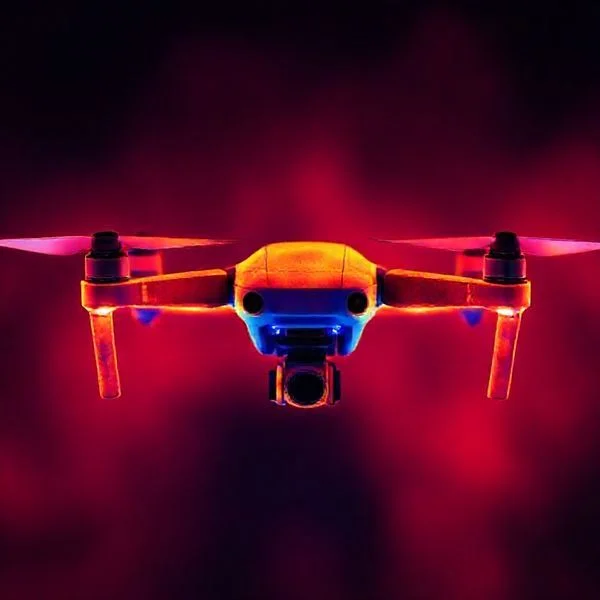
Military drones vary significantly in size, ranging from bird-sized reconnaissance tools to massive aircraft with wingspans exceeding 130 feet. Unlike manned planes, they lack cockpit windows and often feature a prominent bulging forehead for satellite housing and a spherical sensor ball under the nose.
🎯 Key Takeaways
- Large UAVs lack windows and cockpits, giving them a distinct, smooth appearance.
- Many military drones use rear-mounted propellers to keep the front clear for sensors.
- The bulge on the nose usually houses essential satellite communication equipment.
- Scale ranges from backpack-sized quadcopters to jets larger than commercial Cessnas.
- Long, glider-like wings are common for high-altitude endurance and fuel efficiency.
A military drone rarely looks like the four-armed quadcopter you see at a local park. Instead, their shapes are dictated by their specific mission: whether that is hovering silently for 24 hours or diving into a target at high speed. You can generally identify them by three distinct profiles: the long-winged glider, the sleek flying wing, or the small, tube-launched canister. Recognizing these shapes tells you immediately if the craft is designed for long-range surveillance or short-range tactical strikes.

Understanding these physical traits is crucial for visual identification in the field or in media. When you see a bulbous nose or a V-shaped tail, you are looking at specific engineering choices meant to house satellite dishes or improve stability at high altitudes. This guide breaks down exactly what to look for so you can distinguish a strategic asset from a localized tactical tool without getting bogged down in technical jargon.
Prime for Young Adults — 6 Months Free
Exclusive Offer Amazon Prime for Young Adults, Students and 18–24s get six months of Prime free, then half price.
Start 6 Months Free As an Amazon Associate I earn from qualifying purchases.Identifying Features of Large Fixed-Wing MALE and HALE Drones
Recommended Best Deal Products


Medium-Altitude Long-Endurance (MALE) and High-Altitude Long-Endurance (HALE) drones are the “heavy lifters” of modern aerial fleets. To the naked eye, they look like high-performance gliders with oversized heads. Their most striking feature is the extremely high aspect ratio of their wings—they are long, thin, and narrow, designed to catch thin air at altitudes between 25,000 and 60,000 feet. These aircraft are built for efficiency, not dogfighting, which gives them a distinct, almost skeletal silhouette against the sky.
Key Visual Markers of MALE/HALE UAVs
Most of these drones, such as the famous MQ-9 Reaper or the European Heron, share a “pusher” configuration. This means the engine and propeller are located at the very rear of the fuselage rather than the nose. This design choice leaves the front of the aircraft clear for sensitive sensors and communication equipment. When you look at one from the side, the weight distribution looks front-heavy, balanced by those massive, stretching wings.
- The “Bulge” (SATCOM Housing): Look for a prominent, rounded hump above the nose. This characteristic “whale head” houses the satellite dish required for remote control over thousands of miles.
- Tail Configurations: Many utilize an inverted V-tail (pointing downward) or a standard Y-tail. This prevents the tail surfaces from interfering with the rear-mounted propeller’s airflow while providing excellent stability.
- Landing Gear: Unlike sleek fighter jets, these drones often have spindly, long landing gear. This extra clearance is necessary to protect the expensive sensor gimbals mounted under the belly during takeoff and landing.
- Sensor Balls: Almost all large military drones feature a multi-axis turret or “ball” under the chin. This houses the infrared, laser designator, and high-resolution optical cameras that serve as the drone’s eyes.
- Wing Hardpoints: On armed versions, look for pylons under the wings. Unlike cargo planes, these wings are often reinforced to carry laser-guided munitions or external fuel tanks.
Scale Comparisons: Understanding the Size of Tactical vs. Strategic UAVs
It is a common mistake to think all drones are small enough to be carried by hand. In reality, the scale of military UAVs varies more than any other class of aircraft. A strategic drone can dwarf a standard fighter jet, while a tactical drone might be smaller than a baguette. Understanding the scale helps you identify the drone’s “tier”—essentially how far it can fly and who is controlling it.
From Flying Buses to Backpack Birds
To visualize these sizes, compare them to civilian objects you see every day. A HALE drone like the RQ-4 Global Hawk has a wingspan of roughly 130 feet. That is significantly wider than a Boeing 737 airliner. When you see one on a runway, it does not look like a toy; it looks like a massive, pilotless passenger jet with incredibly skinny wings. These are strategic assets, usually controlled from thousands of miles away via satellite links.
In contrast, tactical drones are designed for “over the hill” visibility for ground troops. These do not require runways and often look more like traditional model airplanes, albeit with rugged, matte-grey finishes and no cockpit glass. Their size determines their portability and how much “eyes-on” time they can provide to a local commander.
- Strategic Class (The Giants): Wingspans of 66 to 130 feet. These are the size of private jets or commercial airliners. They require full-sized runways and massive hangars for maintenance.
- Tactical Class (The Mid-Size): These are roughly the size of a Cessna or a small car. Drones like the RQ-7 Shadow have a 14-foot wingspan. You will often see them being launched from rail-mounted catapults on the back of trucks.
- Small Unmanned Aircraft (sUAS): These are designed to fit in a rucksack. The RQ-11 Raven, for example, looks like a high-end RC plane with a 4.5-foot wingspan. It is hand-launched by a single soldier throwing it into the wind.
- Nano-UAVs (The Micro-Class): These are the “insects” of the drone world. The Black Hornet is only 6 inches long and weighs less than 2 ounces. From a distance, it is virtually invisible and looks more like a large dragonfly than a piece of military hardware.
When you see a drone in a photo or in flight, look for nearby objects to establish scale. If it is sitting next to a humvee and looks roughly the same length, it is a tactical drone. If it makes a humvee look like a toy, you are looking at a strategic, long-range aircraft.
Distinct Physical Components: Sensor Balls, Satellite Bulges, and Rear Props
When you look at a military drone, you aren’t just looking at a plane without a pilot; you are looking at a highly specialized collection of sensors and communication arrays. These components give military UAVs (Unmanned Aerial Vehicles) a very specific “alien” silhouette compared to traditional general aviation aircraft.
Prime for Young Adults — 6 Months Free
Exclusive Offer Amazon Prime for Young Adults, Students and 18–24s get six months of Prime free, then half price.
Start 6 Months Free As an Amazon Associate I earn from qualifying purchases.The “Gimbal Ball” Nose
One of the most recognizable features of a military drone like the MQ-9 Reaper or the Bayraktar TB2 is the glass sphere located under the nose. This is the Multispectral Targeting System (MTS). Unlike a standard plane that has a streamlined nose cone, a drone often looks like it has a “chin” or a turret. This ball contains high-definition cameras, infrared sensors for night vision, and laser designators. If you see a small aircraft with a rotating glass turret under its front end, you are almost certainly looking at a military-grade surveillance platform.
Satellite Bulges and Pusher Props
Because these drones are often piloted from thousands of miles away via satellite, they require massive antennas. This results in a prominent satellite hump on the top of the “head,” giving the drone a bulbous, whale-like forehead. Additionally, many military drones utilize a “pusher” configuration where the propeller is located at the very back of the fuselage rather than the front. This design keeps the camera’s view clear of exhaust and propeller flicker. Key identifiers include:
- Large Dorsal Humps: These house the SATCOM (Satellite Communications) dishes.
- Rear-Mounted Engines: Noticeable by the propeller spinning behind the tail assembly.
- V-Tail Fins: Many drones use a “V” or inverted “V” tail instead of the standard “T” or “L” shape found on Cessnas.
Visual Differences Between Military Drones and Commercial Aircraft
Distinguishing a military drone from a small private plane can be tricky at high altitudes, but there are several “dead giveaways” once you know what to look for. The most significant difference is the aspect ratio of the wings. Military drones often look more like gliders than traditional airplanes.
The Windowless Fuselage
The easiest way to spot a drone is the complete lack of a cockpit. Even from a distance, the “face” of a manned aircraft is defined by its windshield and side windows. A military drone is a solid, seamless piece of composite material. There is no glass for a pilot to look out of because the “eyes” are all located in the sensor ball underneath. If the aircraft looks like a sleek, windowless tube with wings, it is a UAV.
Proportions and Flight Patterns
Military drones are designed for endurance, not speed. This leads to specific physical proportions that look “off” compared to a standard Boeing or Piper aircraft. Look for these visual cues:
- Extremely Long, Thin Wings: Drones like the RQ-4 Global Hawk have wingspans wider than a Boeing 737 but a body that is significantly smaller.
- Lack of External Lights: While they have navigation lights for civil airspace, military drones often fly “dark” or have much smaller, less visible lighting arrays than commercial jets.
- Engine Sound: Smaller military drones often sound like a high-pitched lawnmower or a snowmobile, whereas commercial planes have a deeper, bass-heavy engine hum.
Pro Tip: If you are using binoculars, look for “hardpoints” under the wings. Even if they aren’t carrying munitions, military drones often have visible pylons where fuel tanks or sensors are attached, which you will rarely see on a civilian aircraft.
Conclusion
Identifying a military drone is all about recognizing the departure from traditional aviation design. From the bulbous satellite humps and under-nose sensor balls to the long, glider-like wings and the absence of cockpit windows, these machines are built for persistence and surveillance rather than passenger comfort. Once you train your eyes to spot the “pusher” propellers and V-tail fins, these high-tech craft become much easier to distinguish from the morning commute of a local Cessna.
Prime for Young Adults — 6 Months Free
Exclusive Offer Amazon Prime for Young Adults, Students and 18–24s get six months of Prime free, then half price.
Start 6 Months Free As an Amazon Associate I earn from qualifying purchases.If you want to dive deeper into the world of aerial tech, your next step is to research specific models like the MQ-9 Reaper or the RQ-4 Global Hawk to see these features in high-definition photos. Start paying closer attention the next time you hear a high-pitched engine overhead—you might just spot a piece of advanced military hardware in flight! Stay curious and keep your eyes on the skies.
❓ Frequently Asked Questions
What does the shape of a Global Hawk look like?
The Global Hawk features a massive, whale-like nose designed to house satellite gear and exceptionally long, narrow wings similar to a glider. In terms of scale, its wingspan is comparable to a Boeing 737, making it one of the largest UAVs in existence.
Why do many military drones have propellers in the back?
Rear-mounted propellers, or ‘pusher’ configurations, allow the nose and undercarriage to remain completely unobstructed for advanced sensor packages. This design also helps maintain a stable center of gravity without the weight of a cockpit and pilot.
How can you tell the difference between a drone and a manned plane?
The most obvious visual cues are the complete absence of a cockpit canopy, an oddly shaped ‘bulbous’ upper nose, and disproportionately long wings. Additionally, drones often have unconventional tail shapes, such as inverted V-tails, which are rare on manned aircraft.
What do loitering munitions or ‘kamikaze drones’ look like?
These often look like small, simplified airplanes or large darts with folded wings that deploy upon launch. They are typically much smaller than traditional UAVs, lack landing gear, and are designed for a single-use mission profile.
What is the smallest type of military drone?
Nano-UAVs, such as the Black Hornet, resemble tiny toy helicopters and are small enough to fit in the palm of a hand. Despite their miniature size, they feature three distinct cameras for close-range reconnaissance in urban environments.
Why do some military drones have a V-shaped tail?
A V-tail or inverted V-tail design combines the functions of elevators and rudders into two surfaces, reducing weight and aerodynamic drag. This configuration also provides better clearance for the rear engine and helps reduce the drone’s radar cross-section.