Flying a Drone Without a License: Penalties and Fines
Commercial UAV Pilot & Aerial Cinematography Specialist at Drone Nestle · FAA Part 107 Remote Pilot Certification, Commercial UAS Operations · 10+ Years in Commercial UAV Operations, Flight Hardware Benchmarking & 4K Aerial Cinematography
Operating a drone without the proper FAA certification can result in civil penalties exceeding $30,000 per violation and potential criminal prosecution. While recreational flyers must pass the TRUST test, commercial pilots are strictly required to hold a Part 107 Remote Pilot Certificate to avoid severe legal action.
🎯 Key Takeaways
- Commercial flyers face civil fines up to $32,666 per incident.
- Recreational pilots must complete the free TRUST safety test.
- Intentional violations can lead to $250,000 in criminal fines.
- Remote ID technology helps authorities track and identify unlicensed pilots.
- A criminal record and jail time are possible for egregious violations.
Flying a drone without the proper FAA authorization—whether it is a Remote Pilot Certificate (Part 107) for commercial work or the TRUST certificate for hobbyists—exposes you to civil fines starting at $1,500 per violation and escalating to over $32,000 for serious infractions. The Federal Aviation Administration (FAA) does not view unlicensed flight as a minor hobbyist mistake. Instead, they treat it as an unauthorized entry into the National Airspace System, which carries the same weight as operating a traditional aircraft without a pilot’s license. If you are caught, you face a compounding series of financial penalties that can easily bankrupt a small business or an individual enthusiast.


The stakes go beyond simple fines. For repeated violations or flights that endanger public safety, the FAA can escalate the matter to the Department of Justice for criminal prosecution. This leads to permanent criminal records, the seizure of your expensive equipment, and even federal prison time. Understanding the specific legal thresholds is the only way to protect your finances and your freedom. The “I didn’t know” defense does not work with federal regulators; they expect every pilot to know the laws before the propellers start spinning.
Financial Impact: Civil Penalties for Unlicensed Commercial Operations


The FAA’s primary tool for enforcement is the civil penalty. If you are flying for any reason that is not strictly “recreational,” you fall under Part 107 regulations. This includes real estate photography, roof inspections, or even posting monetized drone footage on YouTube. Operating these flights without a license is a direct violation of federal law. The FAA has a dedicated team that monitors social media and receives reports from local law enforcement to track down unlicensed pilots who are profiting from their flights.



The Compounding Nature of FAA Fines
The most dangerous aspect of civil penalties is that they are cumulative. The FAA does not just fine you once for the day; they fine you for every individual violation discovered during an investigation. If an unlicensed pilot flies three separate missions in a single afternoon to capture footage for a client, they are looking at three separate “unauthorized flight” violations. These fines generally start at approximately $1,500 per occurrence for individuals. For businesses, the “per violation” fine can jump significantly, reaching up to $32,666 under current inflation-adjusted statutes.
- Unlicensed Operation: Fines for flying without a Part 107 certificate when required.
- Failure to Register: A separate fine for each drone over 250g not registered with the FAA.
- Commercial Misuse: Higher fine brackets for corporations using unlicensed “contractors” for drone work.
- Airspace Violations: Additional fines for flying in controlled airspace without an LAANC authorization while unlicensed.
Real-World Civil Enforcement Examples


In one high-profile case, the FAA proposed a fine of over $180,000 against a single unlicensed pilot in Philadelphia. The agency cited dozens of flights that violated various safety and licensing rules, many of which were discovered because the pilot posted the footage online. This highlights a critical reality: your digital footprint is often the primary evidence used against you. When the FAA sends a Letter of Investigation (LOI), they usually already have a documented list of your unlicensed flights, timestamps, and locations, leaving very little room for legal maneuvering.


Criminal Consequences and Potential Jail Time for Drone Violations


While most drone disputes are settled with checks and bank transfers, the path to criminal court is shorter than many realize. When your unlicensed flight crosses the line from “unauthorized” to “hazardous,” federal prosecutors get involved. Criminal charges are typically triggered when a pilot flies without a license in restricted areas or interferes with emergency operations. In these scenarios, you are no longer just dealing with an administrative agency; you are facing a federal prosecutor and the possibility of a felony record.
Federal Prosecution and Airspace Violations


Flying a drone without a license near a major airport, over a stadium during a game, or near a wildfire response can lead to immediate criminal charges. Under 49 U.S. Code § 46306, “knowing and willful” violations of aircraft registration and pilot certification requirements can lead to severe punishment. If your unlicensed drone flight is deemed to have “interfered with a person engaged in the operation of an aircraft” or put lives at risk, the legal protections of being a “hobbyist” disappear entirely.


- Imprisonment: Federal law allows for up to one year in prison for standard violations, which can increase for more serious safety threats.
- Criminal Fines: Unlike civil penalties, criminal fines can reach $250,000 for individuals and $500,000 for organizations.
- Asset Forfeiture: The government has the right to seize your drone, your controllers, and any related hardware used in the commission of the crime.
- Permanent Record: A federal conviction for an airspace violation can disqualify you from many professional careers and future licensing.
The Difference Between “Recreational” and “Commercial” Criminality


It is a common misconception that recreational flyers are immune to these consequences. While recreational flyers are not required to have a Part 107 license, they must have passed the TRUST (The Recreational UAS Safety Test) and carry proof of passage. Flying as a “hobbyist” without having taken this mandatory safety test makes you an unlicensed operator in the eyes of the law. If a hobbyist without a TRUST certificate flies into restricted airspace, they are treated with the same level of severity as a commercial pilot who ignored the rules. The legal distinction often comes down to intent: if the FAA can prove you knew a license was required and chose to fly anyway, the “willful” nature of the act makes criminal charges much more likely.
Recreational vs. Commercial: Legal Requirements for Every Pilot


A common misconception among new pilots is that “no license” only applies to professionals. In reality, the FAA requires every single person operating a drone in U.S. airspace to hold some form of authorization. The distinction lies in why you are flying, not necessarily the size of the drone or the quality of your camera.
The “Recreational” Exemption and the TRUST Certificate
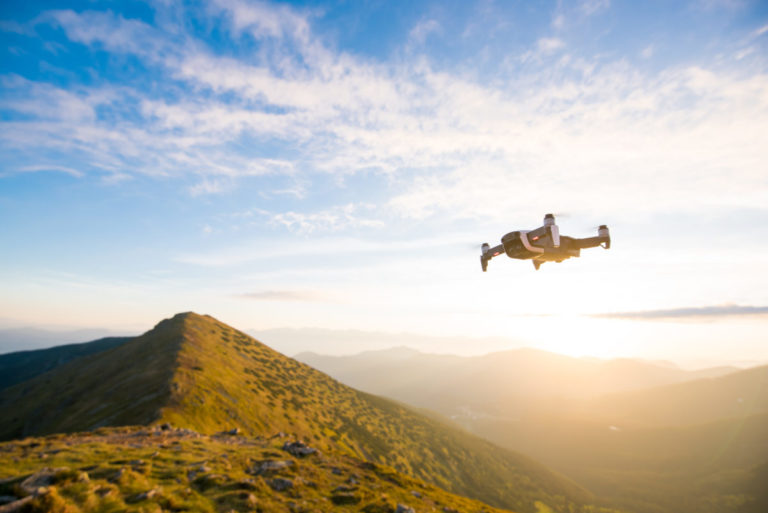
If you are flying strictly for personal enjoyment, you operate under the Exception for Limited Recreational Operations. However, this isn’t a “free pass.” To fly legally as a hobbyist, you must pass The Recreational UAS Safety Test (TRUST). This is a free online training and exam. If a law enforcement officer asks for your “license” while you are at a park, they are looking for your TRUST completion certificate. Failing to produce this can lead to immediate grounding and potential citations.
When “Fun” Becomes “Commercial” in the Eyes of the FAA
The line between hobbyist and professional is thinner than most people realize. The FAA defines commercial work as anything in “furtherance of a business.” If your flight provides any kind of value—even if money doesn’t change hands—you likely need a Part 107 Remote Pilot Certificate. Consider these common scenarios that require a commercial license:
- Social Media Monetization: If you upload drone footage to a YouTube channel that runs ads, that flight is commercial.
- Real Estate Help: Taking “quick shots” of a friend’s house to help them sell it is considered a business service.
- Roof Inspections: Checking your own gutters is fine, but checking your neighbor’s roof as a favor (or for a six-pack of beer) technically requires a license.
- Volunteering: Using a drone to help a non-profit or a local church often falls under commercial regulations.
Enforcement Mechanisms: How the FAA Identifies Illegal Flights


You might think that because the sky is vast, the chances of getting caught are slim. However, the FAA has modernized its enforcement strategies significantly over the last few years. They no longer rely solely on physical “patrols.” Instead, they use digital tools and community reports to track down unlicensed operators.


Remote ID: The Digital License Plate
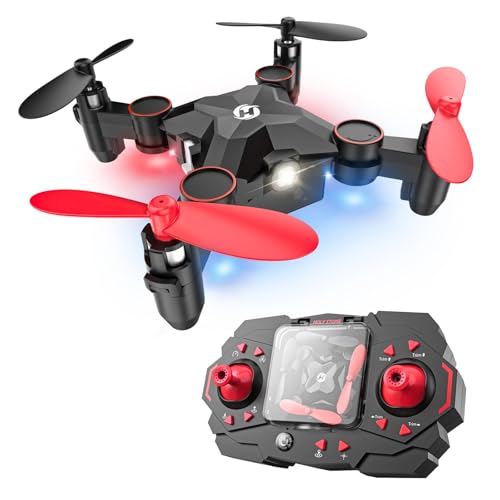
Most modern drones are now equipped with Remote ID technology. This acts as a digital broadcast that transmits the drone’s location, its altitude, and the location of the pilot. Local law enforcement can use handheld receivers or smartphone apps to identify the owner of a drone in real-time. If the broadcast data doesn’t match a registered pilot or a licensed professional, it triggers an immediate red flag for investigators.
Social Media and “The Digital Paper Trail”
Perhaps the most common way unlicensed pilots get caught is through their own vanity. FAA investigators frequently monitor platforms like YouTube, Instagram, and TikTok for high-profile drone footage. If they see a video captured in restricted airspace or for commercial purposes, they will cross-reference the pilot’s name against their database of licensed Part 107 holders.
Practical Tip: Never post footage of a flight that violates FAA regulations. Even if you aren’t caught in the moment, the FAA has years to find that “digital paper trail” and issue a retroactive fine.
- LEAP Program: The FAA works with the Law Enforcement Assistance Program (LEAP) to train local police on how to handle drone violations.
- Citizen Reports: Neighbors and bystanders often report “suspicious” drones via the FAA’s online reporting tools, which are checked by regional Flight Standards District Offices (FSDO).
Conclusion
Flying a drone without a license is a gamble where the stakes are far higher than many hobbyists realize. From civil penalties that can reach five figures to the permanent loss of your flying privileges, the risks of “skipping” the paperwork are significant. Whether you are flying for fun or for profit, understanding your legal standing is the most important part of your pre-flight checklist. The sky is open for those who follow the rules, but it can be an expensive place for those who don’t.
To stay safe and legal, start by taking the free TRUST exam for recreational flying. If you have any intention of using your drone for business, invest the time to study for your Part 107 exam. Get certified today and keep your drone in the air!
💬 Quick Questions & Answers
Can I be fined for flying a drone as a hobby?
Yes, if you haven’t passed the mandatory TRUST test or if you violate safety regulations, you can face FAA civil fines.
What is the maximum fine for commercial flight without Part 107?
The FAA can levy civil penalties of approximately $32,666 per violation for unauthorized commercial drone operations.
Can you go to jail for flying a drone?
Yes, criminal penalties for serious, reckless, or intentional violations include up to three years in federal prison.
How does the FAA find unlicensed pilots?
Authorities use Remote ID signals, social media monitoring, and reports from the public to identify and track unlicensed operators.
Does a mini drone under 250g require a license?
While registration isn’t required for recreational use under 250g, you are still legally required to pass the TRUST test.
❓ Frequently Asked Questions
What is the difference between civil and criminal penalties for drone pilots?
Civil penalties are monetary fines issued by the FAA for regulatory violations, while criminal penalties involve the Department of Justice and can include massive fines or imprisonment for intentional illegal acts.
Are the rules different for recreational hobbyists and commercial pilots?
Yes; hobbyists must take the TRUST test and register drones over 250g, while anyone flying for ‘furtherance of a business’ must have a Part 107 Remote Pilot Certificate regardless of drone weight.
Will the FAA catch me if I post my drone footage on YouTube?
The FAA frequently monitors social media and can use monetized videos as evidence of commercial flight without a Part 107 license, leading to retroactive fines and investigations.
What happens if I fly in restricted airspace without a license?
Flying in restricted zones without authorization is a major violation that can trigger immediate law enforcement intervention and five-figure civil penalties per incident.
Does Remote ID technology make it easier to get caught?
Remote ID broadcasts the drone’s location and the pilot’s control station coordinates, making it significantly easier for local law enforcement to locate unlicensed operators in real-time.
Can my drone be confiscated by authorities?
Yes, local or federal law enforcement may seize drone equipment as evidence during an investigation into illegal, hazardous, or unlicensed flight operations.