Is Drone Delivery Ethical? 4 Major Moral & Social Dilemmas
Commercial UAV Pilot & Aerial Cinematography Specialist at Drone Nestle · FAA Part 107 Remote Pilot Certification, Commercial UAS Operations · 10+ Years in Commercial UAV Operations, Flight Hardware Benchmarking & 4K Aerial Cinematography
The ethical dilemma of drone delivery centers primarily on the unprecedented threat to domestic privacy and data security. Furthermore, it raises critical questions about accountability in autonomous accidents and the socio-economic impact of displacing millions of human delivery workers.
🎯 Key Takeaways
- Privacy concerns arise from high-resolution cameras recording data over private residential properties.
- Determining legal liability in autonomous drone accidents remains a complex and unsolved moral challenge.
- Automated delivery systems threaten the job security of millions of traditional couriers and drivers.
- Noise pollution and flight paths can significantly disrupt local wildlife and neighborhood tranquility.
- Algorithmic bias may lead to inequitable service distribution, favoring wealthy areas over marginalized communities.
Drone delivery is an ethical minefield because it forces a direct trade-off between consumer convenience and your fundamental right to domestic privacy and physical safety. While the promise of a 15-minute delivery window is tempting, it introduces a permanent “eye in the sky” that traditional laws are unequipped to handle. The dilemma lies in the fact that commercial efficiency now requires the constant surveillance and transit of private airspace, turning your backyard into a public thoroughfare without your explicit consent.


Understanding these moral conflicts is essential because the regulatory landscape is being written right now. As a drone enthusiast or consumer, you are at the center of a shift where “public space” is being redefined to include the air just feet above your roof. This isn’t just about noise; it is about who owns the data gathered during transit and who is responsible when a 55-pound autonomous machine makes a split-second decision that could result in property damage or personal injury.
Privacy and the Erosion of Domestic Solitude


The most pressing ethical conflict in drone delivery is the systematic dismantling of visual privacy. When you walk into your backyard, you have a “reasonable expectation of privacy” that is protected by law. However, delivery drones are not just transport vehicles; they are flying sensor platforms equipped with high-resolution cameras, GPS, and often LiDAR. To navigate safely, these drones must “see” and map their surroundings in real-time. This means that for a package to reach your neighbor, a corporate-owned camera may be recording your children in the pool or documenting your expensive backyard equipment.


The Problem of Secondary Data Harvesting
The ethical dilemma intensifies when we consider what happens to the footage captured during a flight. While a company may claim they only use video for navigation, the “data exhaust” created is incredibly valuable. There is currently no federal “bill of rights” preventing companies from using delivery footage to build profiles on your lifestyle. This creates a scenario where your private habits become a commodity. Consider these points of ethical friction:
- Passive Surveillance: Unlike a delivery truck on the street, a drone views your property from an angle that fences cannot block.
- Data Retention: How long does a company store the 4K footage of your property? Is that data being sold to insurance companies or advertisers?
- The “Creep” Factor: Constant drone traffic normalizes the presence of cameras in spaces that were historically sanctuaries from the public eye.
The Grey Area of Low-Altitude Trespass


Legally, the FAA controls the “navigable airspace,” but historically, landowners owned the air “up to the heavens.” Today, the ethical boundary is blurred. If a drone hovers at 50 feet over your garden to drop a package next door, is it trespassing? While it isn’t touching your soil, it is invading your quiet enjoyment of the land. This conflict pits the corporate right to “transit” against your right to be left alone. Without clear boundaries, the sky above your home becomes a digital highway that you have no power to opt out of, effectively ending the concept of domestic solitude.


Everything You Need to Know About the Drone Delivery Ethical Dilemma
The rise of Unmanned Aerial Vehicles (UAVs) for commercial logistics promises to revolutionize how we receive goods, shifting the “last-mile” delivery from congested roads to the open sky. However, this technological leap brings a complex web of moral questions that go far beyond simple engineering. This guide provides a comprehensive walkthrough of the multi-faceted ethical dilemmas posed by drone delivery, helping you understand how privacy, safety, labor, and equity intersect in the autonomous airspace. By following these steps, you will gain the analytical tools to evaluate this emerging industry through a critical ethical lens.
Step 1: Auditing Privacy and Surveillance Overreach
What you need: Access to current data privacy regulations (like GDPR or CCPA), a list of drone sensor capabilities (4K cameras, LiDAR, thermal imaging), and local “Peeping Tom” statutes.
Instructions: Begin by investigating the data-collection potential of delivery drones. Unlike a delivery truck, a drone maintains a “bird’s-eye view” of private property. You must analyze how companies handle the video feed required for navigation. Does the drone record footage of a neighbor’s backyard while delivering a package to you? Map out the data lifecycle: is the footage stored, encrypted, or sold? The ethical dilemma arises when the “right to delivery” clashes with a bystander’s “right to be left alone.” You should specifically look for “Always-On” sensor policies where drones might inadvertently gather metadata on household habits, such as when residents leave or arrive, creating a massive surveillance network under the guise of logistics.
Pro Tip: Look for “Privacy by Design” features in drone software, such as automatic blurring of faces and license plates in real-time, which is a key benchmark for ethical operation.
Step 2: Measuring the Impact of Noise and Acoustic Pollution
What you need: A decibel meter (or mobile app), psychoacoustic research papers on high-frequency sounds, and urban noise ordinance maps.
Instructions: Evaluate the “soundscape” of a neighborhood frequently serviced by drones. Drone rotors produce a high-pitched, whirring sound that humans find significantly more annoying than the low-frequency rumble of a truck, even at the same decibel level. This step involves calculating the cumulative psychological stress on residents and wildlife. If a hub launches 100 drones an hour, the constant “buzzsaw” effect can degrade mental health and lower property values. The ethical conflict here is between consumer convenience (getting a coffee in 5 minutes) and the communal right to a quiet, peaceful environment. You must document how these frequency patterns disrupt local bird populations and domestic pets, which may perceive the drones as airborne predators.
Pro Tip: Avoid assuming all noise is equal; focus on the “persistence” of the sound, as intermittent high-frequency noise is scientifically proven to be more disruptive to cognitive tasks than constant background noise.
Step 3: Calculating Safety Risks and Kinetic Liability
What you need: FAA (or local aviation authority) Part 107 regulations, drone weight specifications, and a basic understanding of kinetic energy formulas (KE = 1/2mv²).
Instructions: This step requires you to assess the physical danger of a “gravity-assisted” failure. If a 10-pound drone carrying a 5-pound package suffers a motor failure at 400 feet, it becomes a dangerous projectile. You must research “Detect and Avoid” (DAA) technologies and their failure rates. The ethical dilemma involves “informed consent”—do the people walking on the sidewalk below consent to the risk of a drone falling on them so someone else can receive a burrito? Investigate liability chains: if a drone is hacked or hits a power line, is the manufacturer, the software provider, or the remote operator responsible? You should analyze the “Safe Harbor” protocols drones use for emergency landings and whether those protocols prioritize property over human life.
Pro Tip: Pay close attention to “parachute recovery systems”; an ethical drone provider will almost always have a redundant mechanical safety measure to slow a descent in the event of total power loss.
Step 4: Assessing Economic Displacement and Labor Rights
What you need: Employment statistics for the “Last Mile” delivery sector, gig economy labor reports, and automation impact studies.
Instructions: Drone delivery is fundamentally an automation play designed to reduce human labor costs. You must analyze what happens to the millions of couriers, van drivers, and local delivery personnel whose jobs are at risk. The ethical dilemma centers on the “just transition”—are companies reinvesting in retraining their workforce, or are they simply discarding human labor for robotic efficiency? Examine the quality of the remaining jobs, such as drone “pilots” or “observers.” Are these roles higher-paying, or are they “ghost work” positions with high stress and low security? You should also consider the impact on small businesses that cannot afford drone technology, potentially giving an insurmountable competitive advantage to massive tech conglomerates.
Pro Tip: Research the “productivity-pay gap” to see if the cost savings from drone automation are being passed to workers or solely to shareholders.
Step 5: Investigating Security and Weaponization Vulnerabilities
What you need: Cybersecurity white papers on GPS spoofing, signal jamming equipment lists (for theoretical study), and “dual-use” technology frameworks.
Instructions: Analyze the drone as a potential “cyber-physical” threat. Because these drones are autonomous and connected to the cloud, they are susceptible to hacking. An ethical dilemma emerges regarding the “dual-use” nature of the tech: a delivery drone can easily be repurposed for malicious surveillance or as a delivery mechanism for contraband or explosives. You must evaluate the encryption standards of the command link. If a bad actor can “spoof” a GPS signal, they could divert a drone to a different location or crash it into a crowd. This step requires you to look at how companies prevent their fleet from being “weaponized” by third parties and what level of control they retain over a hijacked unit.
Pro Tip: Check if the drone system uses “geofencing” that cannot be overridden by the user, as this is a critical safety feature to prevent drones from entering restricted or sensitive airspace.
Step 6: Weighing Environmental Costs and Battery Life Cycles
What you need: Life Cycle Assessment (LCA) tools, data on Lithium-Polymer (LiPo) battery production, and carbon footprint calculators for electric vs. internal combustion engines.
Instructions: While drones are electric and produce zero tailpipe emissions, their “green” status is debatable. You must calculate the environmental cost of the rare-earth minerals required for high-capacity batteries. The ethical dilemma involves “environmental shifting”—are we just trading CO2 from trucks for toxic chemical waste from batteries and electronic scrap? Analyze the energy efficiency of the drone. It takes significantly more energy to keep a package airborne against gravity than it does to roll it on wheels. Evaluate the recycling programs offered by drone manufacturers. If a battery is discarded every 500 flights, the cumulative toxic waste could outweigh the carbon savings of taking a single truck off the road.
Pro Tip: Look for “Energy-Per-Package” metrics. Drones are most ethical and efficient for light, high-value items (like medicine) rather than heavy, low-value items (like cases of water).
Step 7: Evaluating Social Inequity and “Delivery Deserts”
What you need: Demographic maps, average household income data by zip code, and telecommunications infrastructure maps (5G/LTE coverage).
Instructions: Examine who actually benefits from drone technology. Because drones require sophisticated landing pads or clear, open yards, they are often restricted to affluent suburban areas. This creates a “digital divide” in logistics. The ethical dilemma is the creation of “delivery deserts” where low-income, high-density urban areas—who might benefit most from rapid delivery—are excluded due to technical or safety constraints. You must investigate if the algorithms that determine “deliverable zones” are biased against certain neighborhoods. Does the drone service cater only to “premium” customers, thereby further marginalizing those without the infrastructure to support autonomous landings? Map out the proposed service areas and compare them against socioeconomic data.
Pro Tip: Identify if a company offers “Community Hub” drop-off points, which is a more equitable approach than “Yard-Only” delivery as it serves high-density apartment dwellers.
Step 8: Synthesizing an Ethical Governance Framework
What you need: Stakeholder mapping templates, a notebook for policy drafting, and a “Values-Led” design rubric.
Instructions: In the final step, you must synthesize all the previous findings into a set of actionable ethical guidelines. This involves balancing the competing interests identified in Steps 1 through 7. Create a scorecard for drone companies: How do they rank on privacy? How do they rank on labor? The ultimate dilemma is that no drone delivery system can be 100% ethical in all categories simultaneously. Your task is to define the “threshold of acceptable harm.” For example, is a 5% increase in noise pollution acceptable for a 50% decrease in medical delivery times? Document the trade-offs and propose a governance model that includes community oversight, transparency reports, and victim compensation funds for accidents.
Pro Tip: Use the “Unintended Consequences” framework to brainstorm three ways a “good” policy could be exploited for “bad” outcomes before finalizing your guidelines.
✅ Final Checklist
- Verified the drone’s data retention policy and confirmed it uses real-time face blurring.
- Measured the acoustic impact and compared it against the “annoyance threshold” for residential areas.
- Calculated the kinetic energy of the drone at maximum payload to assess potential strike severity.
- Identified the displacement risk for local courier jobs and checked for retraining programs.
- Audited the cybersecurity protocols, specifically looking for end-to-end encryption on the control link.
- Conducted a life cycle analysis on the batteries to ensure a net-positive environmental impact.
- Mapped the service area to ensure it does not unfairly exclude marginalized communities.
Important Notes:
- Safety Warning: Never attempt to interfere with or “test” a flying delivery drone physically; this is a federal crime in many jurisdictions and extremely dangerous.
- Legal Recourse: If you believe your privacy is being violated, contact your local aviation authority rather than attempting to disable the device.
- Estimated Time: A full ethical audit of a local drone program typically takes 20-30 hours of research and data collection.
- Cost Range: Conducting this research is generally free (using public data), though high-end decibel meters or specialized software can cost $200-$500.
The Accountability Gap: Liability in Autonomous Systems



When a human delivery driver hits a parked car, the chain of custody for blame is clear. However, delivery drones operate on complex algorithms and machine learning. This introduces the “black box” problem: when an autonomous drone fails, it is often difficult to determine if the fault lies with the software developer, the hardware manufacturer, or a localized sensor glitch. This creates a moral vacuum where victims of drone accidents may find it impossible to hold a specific entity accountable for damages.

The Algorithmic Choice of Failure
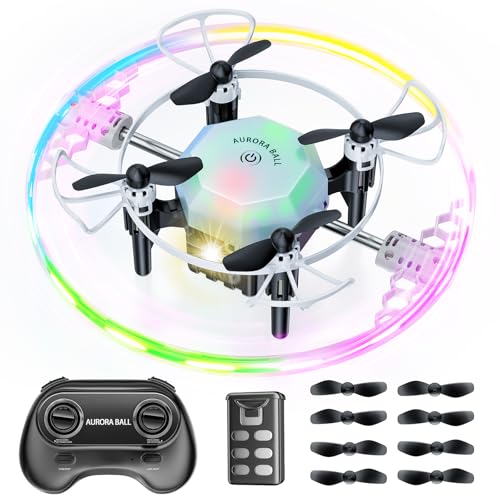


Perhaps the most chilling ethical dilemma in drone delivery is the “crash logic” programmed into the flight controller. If a drone suffers a critical motor failure over a crowded sidewalk, the onboard AI must decide where to ditch. Should it aim for a parked car (causing property damage) or a grassy patch where a person might be sitting (causing injury)?


- Value Mapping: Engineers must literally “score” the value of different objects to tell the drone what to hit in an emergency.
- The Trolley Problem: This is the classic philosophical dilemma brought to life at 400 feet. We are essentially asking programmers to decide who or what is “expendable” during a technical failure.
- Lack of Transparency: Most companies treat their flight safety algorithms as proprietary trade secrets, meaning you have no way of knowing how a drone is programmed to react if it falls toward your house.
Who Owns the Error?


The secondary focus here is the legal “Accountability Gap.” In many jurisdictions, if a drone crashes due to a “freak” weather event or an unforeseen software bug, companies may argue they weren’t negligent because a human wasn’t at the controls. This shifts the risk from the billion-dollar corporation to the individual homeowner. If a delivery drone destroys your expensive drone accessories or damages your roof, the process of proving “fault” in an autonomous system is a legal nightmare that most consumers are not prepared to fight.
Socio-Economic Shifts: Job Displacement and Economic Equity


While the convenience of a 15-minute delivery is undeniable, we must look at the human cost behind the automation. The transition from human-driven vans to autonomous drones represents a massive shift in the labor market. This shift creates a profound ethical question: Is the speed of our delivery worth the disruption of millions of livelihoods?
The Impact on Traditional Labor
The rise of automated delivery systems directly threatens the roles of delivery drivers, warehouse staff, and local couriers. While proponents argue that drone technology will create new jobs in maintenance and remote piloting, these roles often require specialized technical training that traditional drivers may not have access to. The ethical dilemma lies in the speed of transition—if technology outpaces the workforce’s ability to reskill, we risk leaving a significant portion of the population behind.
- Practical Tip: Support companies that offer “Just Transition” programs, which help workers move from manual roles into tech-focused positions within the drone industry.
- Economic Example: A local courier service might lose its entire neighborhood route to a corporate drone fleet, leading to a loss of small-business revenue in the community.
- Key Concern: The “gig economy” may become even more volatile as automated systems take over the most profitable delivery routes.
Widening the Digital Divide
There is also the risk of “geographic elitism.” Currently, drone delivery infrastructure is being tested primarily in wealthy, tech-forward urban centers. This creates a disparity where affluent neighborhoods enjoy ultra-fast, efficient service, while rural or lower-income areas remain stuck with slower, more expensive traditional methods. Ensuring equitable access to this technology is essential to prevent a two-tier society of convenience.
Environmental Harmony: Noise, Wildlife, and Urban Safety


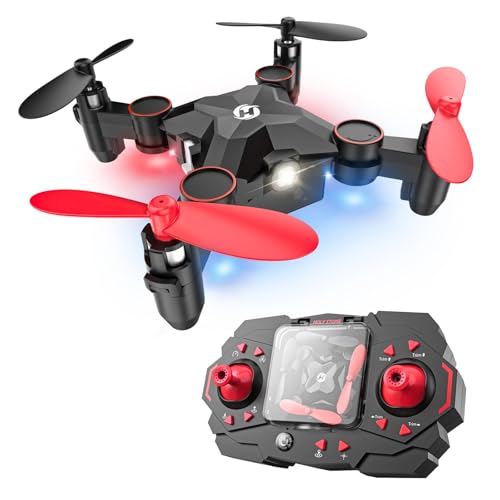
Drones are often marketed as a “green” alternative to carbon-emitting delivery trucks. However, the environmental impact of thousands of drones buzzing through the sky introduces new ethical complications regarding noise pollution and the safety of our shared airspace.


Acoustic Pollution and Wildlife Stress
The high-pitched hum of drone propellers isn’t just a nuisance for humans; it can be devastating for local wildlife. Birds, in particular, are sensitive to the frequency of drone motors, which can disrupt nesting patterns or lead to territorial attacks on the drones themselves. When we prioritize our delivery speeds, we are effectively encroaching on the “quiet enjoyment” of nature and the habitats of urban wildlife.
- Specific Tip: If you are a drone enthusiast or operator, look for “low-noise” propellers and accessories. These quiet-flight accessories are designed to minimize acoustic signatures.
- Wildlife Example: Studies have shown that raptors, like hawks and eagles, often view drones as aerial intruders, leading to physical collisions that harm the animals and destroy the equipment.
- Urban Reality: Persistent drone noise in residential areas has been linked to increased stress levels and sleep disturbances for residents.
Safety in Densely Populated Areas
The ethical burden of safety is perhaps the most immediate concern. No matter how advanced the AI, mechanical failures happen. A multi-pound drone carrying a package becomes a dangerous projectile if it loses power over a crowded sidewalk. Manufacturers and regulators face the moral challenge of deciding what “acceptable risk” looks like in a world where the sky is filled with autonomous delivery vehicles.
- Safety Accessories: Modern delivery drones are increasingly equipped with emergency parachutes and propeller guards to mitigate the impact of a mid-air failure.
- Flight Paths: Ethical drone operators prioritize routes over industrial zones or waterways rather than schools or crowded parks to minimize ground-level risk.
Conclusion
The path toward widespread drone delivery is paved with both incredible potential and significant moral hurdles. From protecting the privacy of our backyards to ensuring that economic growth doesn’t leave the workforce behind, the “drone revolution” requires more than just technological prowess; it requires a conscious ethical framework. We must balance our desire for instant gratification with a commitment to safety, equity, and environmental respect.
To stay ahead of the curve, consider these next steps: First, research the drone delivery laws in your specific city to understand your rights as a resident. Second, if you are a pilot, invest in high-quality safety and noise-reduction accessories to lead by example in responsible flying. What do you think about the future of the sky? Leave a comment below and share your thoughts on the drone delivery debate!
❓ Frequently Asked Questions
What makes drone delivery an ethical dilemma regarding data collection?
Beyond delivering packages, drones gather vast amounts of visual and geolocation data. The ethical concern lies in how companies store, use, or potentially sell data collected from overflights of private homes without explicit resident consent.
How do drones decide where to crash in an emergency?
This is a ‘trolley problem’ for AI, where the drone must choose between damaging property or risking human injury. Developing ethical algorithms that prioritize human life over corporate assets is a primary challenge for engineers.
What is the impact of drone noise on residential mental health?
Constant low-altitude buzzing is more than just a nuisance; it can lead to increased stress, sleep disruption, and reduced quality of life. This creates a conflict between consumer convenience and the right to a quiet environment.
Are there safety risks for pedestrians and pets?
Mechanical failures or bird strikes can cause drones to fall, posing a physical threat to anyone below. The ethical dilemma is whether the speed of delivery justifies these inherent physical risks to the general public.
Does drone delivery promote social inequality?
There is a significant risk that drone services will only be deployed in affluent areas, further widening the gap in infrastructure quality. Ethical implementation requires ensuring that technological advancements benefit all sectors of society.
How does the ‘dehumanization’ of delivery impact society?
Removing human interaction from the delivery process can lead to increased social isolation. The loss of the ‘neighborhood courier’ role changes the social fabric and the nature of service-based community relationships.

Similar Posts