What Is Exhaust Drone? Car Exhaust Resonance Explained
Commercial UAV Pilot & Aerial Cinematography Specialist at Drone Nestle · FAA Part 107 Remote Pilot Certification, Commercial UAS Operations · 10+ Years in Commercial UAV Operations, Flight Hardware Benchmarking & 4K Aerial Cinematography
Exhaust drone is a low-frequency acoustic resonance that creates a persistent, vibrating hum inside a vehicle’s cabin. It typically occurs at specific RPM ranges and can cause driver fatigue due to the physical pressure felt in the ears.
🎯 Key Takeaways
- Exhaust drone is caused by sound waves reaching a frequency that resonates with the cabin.
- It is most commonly experienced during steady highway cruising between 2,000 and 3,000 RPM.
- Unlike a ‘good’ engine note, drone is an annoying, non-harmonic vibration causing physical discomfort.
- Removing factory resonators or installing cheap aftermarket mufflers is the primary cause of drone.
- Helmholtz resonators and J-pipes are common engineering solutions used to cancel out specific drone frequencies.
Exhaust drone is a persistent, low-frequency hum that vibrates through a vehicle’s cabin, often felt as much as it is heard. Unlike the crisp crackle of a performance muffler or the rhythmic thrum of a V8 engine, drone is an unwanted byproduct of acoustic resonance. It occurs when the sound waves generated by your engine synchronize perfectly with the physical dimensions of your exhaust system or the air volume inside your car. This creates a “standing wave” that amplifies the sound to uncomfortable levels, often making long highway drives unbearable.


Practically speaking, drone is the enemy of a high-quality driving experience. It causes significant ear fatigue, rattles interior plastic trim, and makes it nearly impossible to hold a conversation or enjoy the car’s audio system. While a loud exhaust can be a choice, a droning exhaust is almost always a mechanical oversight. Understanding the physics behind this vibration is the first step toward reclaiming your cabin’s peace and quiet without sacrificing your engine’s power or external tone.
The Physics of Acoustic Resonance in Vehicle Cabins
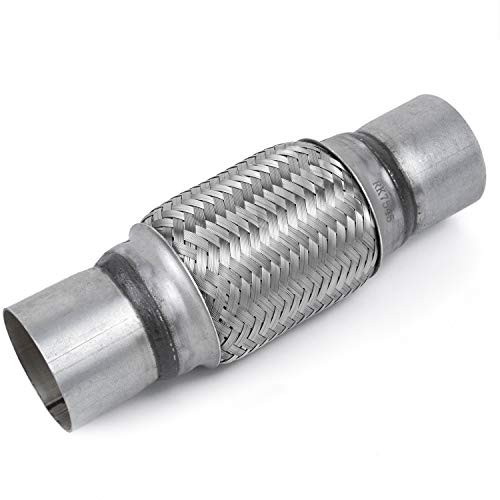


To understand drone, you have to think of your car’s exhaust system as a giant musical instrument, similar to a pipe organ or a flute. As your engine’s valves open and close, they send pulses of high-pressure gas and sound waves down the exhaust piping. When these sound waves reach the end of a pipe or hit a baffle, they reflect backward. If the timing of these reflections matches the timing of the new pulses coming from the engine, the waves “stack” on top of each other. This is known as acoustic resonance.


The “Standing Wave” Effect
Inside your exhaust, these stacked waves create what physicists call a standing wave. At specific engine speeds, the frequency of the exhaust pulses matches the “natural frequency” of the exhaust tubing. Instead of the sound traveling out the tailpipe and dissipating into the atmosphere, the energy gets trapped. This trapped energy vibrates the metal of the pipes, which then transfers that vibration into the chassis and, eventually, the air inside your cabin.
- Frequency Matching: Drone typically occurs at low frequencies, usually between 50Hz and 150Hz.
- Harmonic Reinforcement: The sound becomes exponentially louder because the reflected wave reinforces the incoming wave.
- Material Density: Thinner, lightweight stainless steel pipes often resonate more easily than heavy, cast-iron factory components.
The Cabin as a Resonator


The interior of your car acts very much like the body of an acoustic guitar. It is a hollow box filled with air that has its own natural resonant frequency. When the exhaust drone hits that specific frequency, the air inside the cabin begins to vibrate sympathetically. This is why you might feel a “pressure” in your ears or a buzzing in your seatback. You aren’t just hearing a noise; you are sitting inside a vibrating chamber where the sound is being amplified by the very walls around you.


Identifying the Symptoms: Drone vs. Desirable Exhaust Note


Many drivers confuse a loud exhaust with a droning exhaust, but the two are very different. A desirable exhaust note changes in pitch and volume as you move through the gears. It provides feedback about the engine’s load and speed. Drone, however, is characterized by its static nature. It is a flat, unvarying tone that stays at a constant pitch regardless of whether you are slightly accelerating or maintaining a steady speed.
The Pressure Sensation


One of the most telling symptoms of true exhaust drone is a physical sensation of pressure in the inner ear. Because drone happens at such low frequencies, it mimics the “bass” effect of a large subwoofer. While a performance exhaust note sounds like it is coming from the back of the car, drone feels like it is coming from everywhere at once. It surrounds you, making it difficult to pinpoint the source of the noise.


- The Conversation Test: If you have to raise your voice to talk to a passenger while cruising at a steady speed, you have a drone problem.
- Vibrating Mirrors: Persistent drone often causes the rearview mirror or side mirrors to blur slightly due to high-frequency vibration.
- Ear Fatigue: If you feel a “ringing” in your ears or a headache after a thirty-minute highway drive, the resonance is at an unhealthy decibel level.
The Critical RPM Range


Drone is almost always “RPM-dependent” rather than speed-dependent. Most vehicles experience the worst drone in a specific window, typically between 2,000 and 3,000 RPM. This is particularly problematic because this range usually coincides with highway cruising speeds in top gear. You might have a car that sounds perfect and aggressive around town, but the moment you settle into 70 mph on the interstate, the resonance hits its peak. This “sweet spot” for drone is where the engine’s firing frequency perfectly aligns with the length of your exhaust path.
Common Scenarios for Drone
While factory cars are engineered to avoid these frequencies using heavy resonators and dampeners, several common scenarios trigger drone in the aftermarket world:
- Muffler Deletes: Removing the primary sound-absorption component often removes the only thing breaking up standing waves.
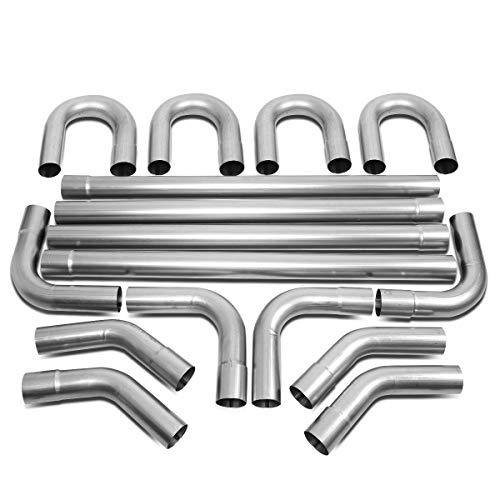
- Over-Sized Piping: Moving to a 3-inch or 3.5-inch pipe can change the volume of the “instrument,” lowering the resonant frequency into a more noticeable range.
- Lack of Resonators: Many “cat-back” systems prioritize flow over sound quality, omitting the small pre-mufflers (resonators) designed to cancel specific frequencies.
Factors That Amplify Exhaust Drone in Aftermarket Systems


While factory exhausts are designed to be quiet and unobtrusive, many aftermarket systems prioritize exhaust flow and a more aggressive tone. Unfortunately, this pursuit of performance can inadvertently amplify the very frequencies that cause cabin drone. When the natural resonance of the exhaust system aligns perfectly with the engine’s firing frequency at cruising speeds, the result is that unmistakable, vibrating hum.
Oversized Piping and Thin-Walled Materials
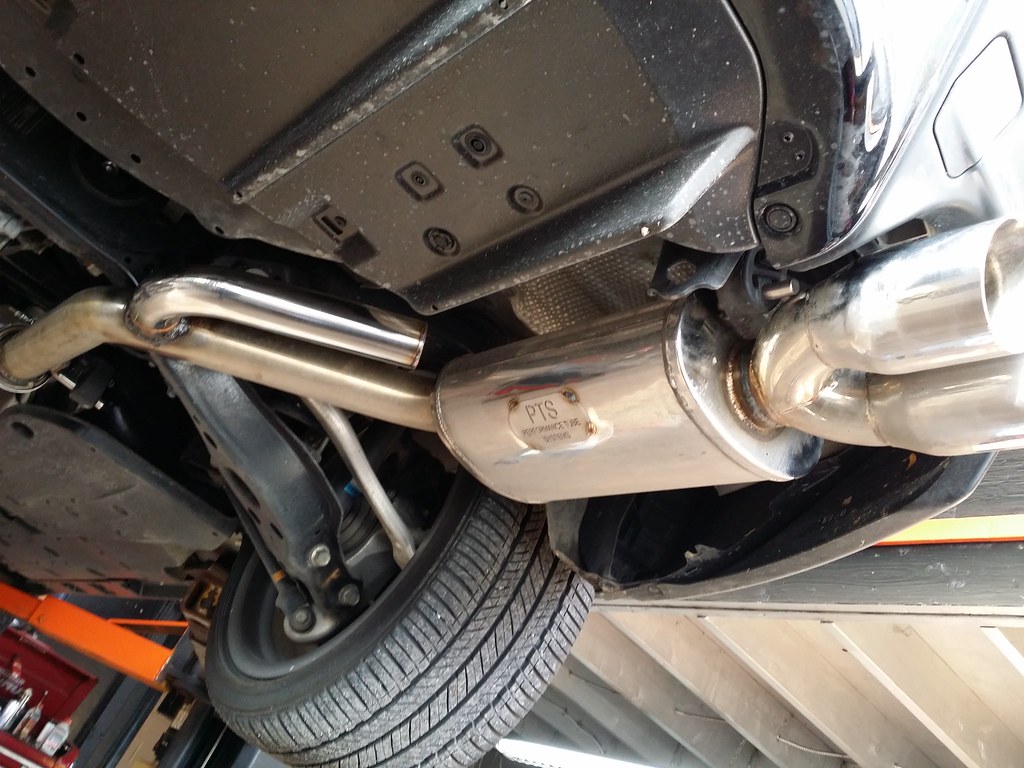
A common misconception in the car community is that “bigger is always better” regarding exhaust diameter. However, excessively large pipes can cause exhaust gas velocity to drop, creating a massive “echo chamber” for low-frequency sound waves. Furthermore, the material choice plays a massive role. High-end systems use thick-walled stainless steel to dampen vibrations, whereas budget-friendly systems often use thin-walled aluminum or low-grade steel. These thinner materials act like the body of an acoustic guitar, vibrating along with the sound waves and projecting that drone directly into the chassis.
The Removal of Factory Resonators
The most frequent culprit of intolerable drone is the “resonator delete.” Factory resonators are not mufflers; their sole purpose is to cancel out specific frequencies. When an enthusiast replaces these with a straight pipe to get more volume, they remove the primary defense against internal resonance. Without that specialized chamber to “trap” the offending sound waves, the cabin becomes a megaphone for the engine’s deepest tones.


- Transmission Behavior: Automatic and CVT transmissions often keep the engine at a steady, low RPM during highway cruising, which is the “danger zone” for drone.
- Chassis Transfers: Upgrading to stiff, polyurethane exhaust hangers can transfer exhaust vibrations directly into the floorboards.
- Vehicle Load: Carrying heavy cargo or towing a trailer increases engine load, which deepens the resonance and makes drone more pronounced.
Engineering Solutions and Alternatives to Minimize Drone


Modern exhaust engineering has evolved significantly, proving that you do not have to sacrifice comfort for a great-sounding car. Manufacturers now use acoustic science to target and neutralize unwanted frequencies while allowing the “good” engine notes to pass through. If you are shopping for an upgrade, looking for these specific features can save you from a noisy interior.
Helmholtz Resonators and J-Pipes
One of the most effective “anti-drone” technologies is the Helmholtz resonator, often visible as a small “J-pipe” branching off the main exhaust line. This is a dead-end pipe calculated to a specific length. When sound waves enter this side-branch, they bounce off the end and exit back into the main stream exactly out of phase with the incoming waves. This creates destructive interference, effectively cancelling out the drone frequency without restricting any exhaust flow. It is a mathematical solution to a physical problem.
Absorption Technology and Internal Baffles
Premium mufflers often utilize multi-stage packing materials, such as long-strand glass fiber or stainless steel mesh, to absorb high-pressure sound waves. Unlike cheap mufflers that simply try to “block” sound, these are designed to convert sound energy into trace amounts of heat. Some advanced systems also use internal chambers that force sound waves to collide with one another, neutralizing the hum before it ever reaches the tailpipe.
- Quarter-Wave Tubes: Similar to J-pipes, these are precision-tuned to the exact “problem frequency” of a specific vehicle.
- Active Valve Systems: These allow the driver to switch between a muffled “touring” mode for the highway and an open “sport” mode for spirited driving.
- Reflective Technology: Specialized internal baffles that reflect sound waves back onto themselves to cancel out low-frequency vibrations.
Conclusion: Finding the Right Balance
Exhaust drone is more than just a loud noise; it is a physical phenomenon caused by sound waves hitting their natural resonance point within your car’s cabin. While it can turn a long road trip into a headache, understanding that it stems from specific vibrations and frequencies allows you to make better hardware choices. If you are looking to upgrade your vehicle’s sound, prioritize systems that specifically mention anti-drone technology or include specialized resonators tuned for your engine type.
Before you commit to a new exhaust, research the specific engineering used in the kit and listen to sound clips of the system at cruising speeds rather than just at wide-open throttle. Your ears (and your passengers) will thank you. Ready to transform your drive? Look for “Drone-Free” guarantees to ensure your car sounds as good inside as it does on the outside.
❓ Frequently Asked Questions
Why does my exhaust only drone on the highway?
On the highway, the engine maintains a steady RPM that often matches the resonant frequency of the exhaust piping or the cabin air space. This creates a standing wave that amplifies the sound to uncomfortable levels.
What is the difference between exhaust volume and exhaust drone?
Volume is the overall loudness of the engine note, whereas drone is a specific, irritating frequency that resonates and vibrates the interior. You can have a loud exhaust that does not drone if it is properly tuned.
How does a Helmholtz resonator fix the drone issue?
A Helmholtz resonator is a ‘dead-end’ pipe or chamber that traps a specific frequency of sound, causing it to bounce back and cancel out the incoming noise. It targets the exact frequency of the drone without restricting airflow.
Will adding more insulation to my car stop the drone?
Sound deadening can help reduce high-frequency road noise, but low-frequency drone is often a structural vibration that is difficult to mask with just insulation. Fixing the source in the exhaust is usually more effective.
Can a muffler delete cause excessive drone?
Yes, removing the muffler often removes the primary sound-dampening component, allowing raw, untuned sound waves to enter the cabin and vibrate the interior panels.
Are there specific types of cars more prone to exhaust drone?
Vehicles with large, open cabins like SUVs and hatchbacks are often more susceptible because the interior volume creates a larger ‘echo chamber’ for low-frequency waves.

Similar Posts